


Safe & Effective Chemical Peeling in Nagoya with English Support by a Board-Certified Surgeon
Do you ever feel a sense of frustration looking in the mirror, focusing on the same stubborn acne that won’t clear, the dark spots left behind by past blemishes, or a general dullness that seems to mask your skin’s true radiance? You’ve likely tried a multitude of creams, serums, and treatments, only to find the results are temporary at best. This cycle can be disheartening, leaving you wondering if a real, lasting solution even exists for your skin concerns here in Nagoya.
What if the answer wasn’t another product, but a powerful, science-backed medical procedure with a history stretching back to figures like Cleopatra? Enter the chemical peel. Far from a fleeting beauty trend, a chemical peel is a sophisticated treatment that acts as a “reset button” for your skin. When performed by a board-certified surgeon, it is one of the most effective tools in dermatology for fundamentally transforming skin health. At our clinic, we combine this medical expertise with full English support, ensuring you are not only safe but also fully understood throughout your entire journey to clearer, more vibrant skin.
But how does it actually work? Is it painful? What is the difference between a peel and a laser, and which is right for you? This comprehensive guide, written from a physician’s perspective, will answer all these questions. We will delve into the science of skin renewal, explore the wide range of modern peels available—from acne-fighting Salicylic acid to advanced “no-downtime” rejuvenation peels like the PRX-T33—and help you determine if you are an ideal candidate. Read on to demystify the process and discover how to safely achieve the healthy, glowing complexion you deserve.
What is Chemical Peeling? A Guide for Nagoya Residents
When you look in the mirror, do you find yourself focusing on persistent acne that just won’t clear up, dark spots left behind by past blemishes, or a general dullness that seems to hide your skin’s natural glow? It’s a frustrating experience, and one that many people share. If you’re in Nagoya and seeking a reliable solution, chemical peeling offers a time-tested and scientifically-backed approach to skin rejuvenation.
Far from a fleeting beauty trend, chemical peeling is a well-established dermatological procedure used for both aesthetic enhancement and treating specific medical skin conditions. As a physician, I view it as a powerful tool to reset the skin’s surface. The procedure involves applying a specialized chemical solution to the skin, which meticulously exfoliates the outermost, damaged layers. This process reveals the healthier, more vibrant skin waiting just beneath the surface. It’s a method with a long history; in fact, it’s said that figures like Cleopatra used sour milk (containing lactic acid, a type of alpha-hydroxy acid or AHA) for skin care, which can be seen as an early form of chemical peeling.
Today, we have a much more sophisticated and controlled approach. At our clinic, we don’t believe in a one-size-fits-all solution. We offer a comprehensive range of peels to precisely target your unique concerns, including Salicylic acid peel (for acne), Black peel (for pores and sebum), Massage peel (PRX-T33) and Milano Repeel (for firming), Manuka peel (for antibacterial and anti-inflammatory effects), Reverse peel (for deep pigmentation), and the innovative LHALA peel and LHALA doctor peel (for gentle rejuvenation). This variety allows us to create a truly personalized treatment plan for you.
How chemical peels work to rejuvenate your skin
Think of a chemical peel as a controlled and accelerated form of your skin’s natural renewal process. You could compare it to carefully renovating a room: you first need to remove the old, worn-out wallpaper to reveal the clean wall underneath before you can apply a fresh, new layer. A chemical peel does something similar for your skin.
The science behind it is a process of “controlled, superficial injury,” a concept well-documented in dermatological research. By applying a specific acid, we intentionally create a very mild, controlled injury to the skin’s surface. This sends a powerful signal to your body’s innate healing mechanisms, essentially telling them to “wake up and repair.” This triggers several beneficial actions:
- Accelerated Exfoliation: The chemical solution dissolves the “glue” holding dead, dull, and damaged skin cells to the surface. This shedding process is much more effective and uniform than what can be achieved with at-home scrubs.
- Stimulation of Cell Turnover: Removing the top layer signals the basal layer (the deepest part of the epidermis) to speed up the production of new, healthy skin cells. This fresh layer pushes its way to the surface, resulting in a brighter complexion.
- Collagen and Elastin Remodeling: The stimulation doesn’t just stop at the surface. The process sends signals down to the dermis, the deeper “factory” of your skin, encouraging it to produce new collagen and elastin. These are the crucial proteins that give your skin its firmness, plumpness, and elasticity. The result is skin that is not only smoother but also structurally stronger and more youthful.
The effectiveness of a peel is not random; it is a science. As your physician, I carefully select the type of acid, its concentration, pH level, and the application time, all based on your specific skin type, condition, and treatment goals. This clinical control is what separates a professional peel from over-the-counter products and ensures both safety and optimal results.
The key differences from other treatments like lasers
When exploring skin rejuvenation options in Nagoya, it’s common for patients to ask, “Should I get a chemical peel or a laser treatment?” While both are excellent tools for improving skin quality, they work in fundamentally different ways. The best choice depends entirely on your specific concerns, skin type, and desired outcome.
Imagine you are an artist working on a painting. A chemical peel is like using a broad, soft brush with a wash of color to improve the entire canvas’s background tone, texture, and overall brightness. It works over a wide surface area, making it ideal for addressing issues that are more widespread, such as:
- General skin dullness
- Superficial fine lines
- Active acne breakouts across the face
- Uneven skin texture
In contrast, a laser treatment (like a Pico laser) is like using a very fine-tipped pen or a precise eraser. It delivers focused beams of light energy to target very specific, small problems with high precision. Lasers excel at:
- Removing distinct, individual sun spots or freckles
- Targeting specific broken blood vessels
- Treating deep, “ice-pick” or “boxcar” acne scars
- Addressing deeper wrinkles
Here’s a breakdown to clarify the distinction:
| Feature | Chemical Peeling | Laser Treatment (e.g., Pico Laser) |
|---|---|---|
| Tool Used | A specialized chemical solution (e.g., acid). | A device emitting focused light energy. |
| Mechanism | Chemical resurfacing: Dissolves and removes skin layers over a broad area. | Photo-thermal/acoustic resurfacing: Uses heat or light energy to vaporize or shatter targets (pigment, tissue). |
| Best For | Improving overall skin health, texture, active acne, and widespread, superficial discoloration. | Targeting deep, specific problems like individual spots, deep scars, or wrinkles with high precision. |
It’s crucial to understand that these treatments are not rivals but potential partners. As research highlights, combining different modalities can often yield superior results. For example, we might start with a series of chemical peels to improve your overall skin texture and reduce background pigmentation. Once the “canvas” is prepped, we can then use a laser to precisely eliminate any remaining stubborn spots. This kind of combination therapy, tailored by a professional, is often the key to achieving the most comprehensive and satisfying transformation for your skin. The first step is always a thorough consultation to map out the best strategy for your unique journey.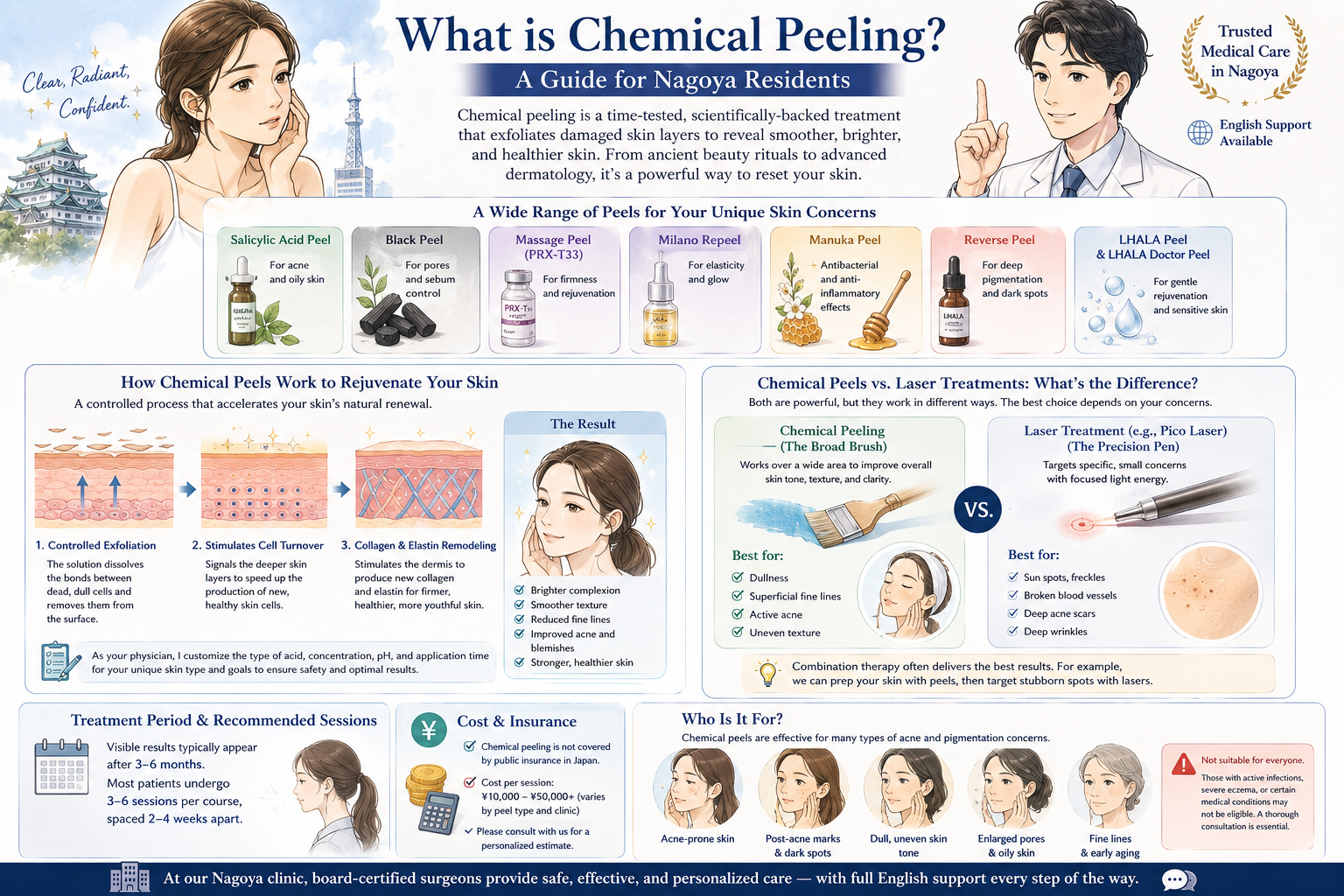
Top Benefits of Chemical Peeling for Your Skin Concerns
It can be profoundly disheartening to look in the mirror and see skin concerns that don’t seem to budge, no matter what creams or serums you try. Whether it’s persistent acne from your teenage years that has followed you into adulthood, the lingering brown spots left behind, or the first fine lines that make you feel older than you are, these issues can weigh on your confidence. If you’re in Nagoya and searching for a real, science-backed solution, chemical peeling is a versatile and powerful medical treatment that can fundamentally reset your skin’s health and appearance. This isn’t just about surface-level beauty; it’s about stimulating your skin’s own powerful regenerative capabilities to address the root of the problem.
Targeting acne and reducing acne scars
Acne is more than just a skin condition; for many, it’s a source of daily frustration and self-consciousness. A chemical peel offers a direct and effective strategy by tackling the primary causes of breakouts. Imagine your pores are like tiny pipes that have become clogged with a mixture of oil, dead skin cells, and debris. This blockage is what leads to blackheads, whiteheads, and inflamed pimples. A chemical peel acts like a specialized deep-cleaning service for these pipes.
At our clinic, we often use Salicylic acid peels for this very purpose. Salicylic acid is a beta-hydroxy acid (BHA) that is oil-soluble. This unique property allows it to penetrate deep into the sebum-filled pores and dissolve the hardened clogs that topical cleansers can’t reach. A systematic review of multiple clinical studies, published in Annali Italiani di Chirurgia, confirmed that superficial chemical peels are a safe and well-tolerated treatment for active acne. The research also highlighted a crucial point for our diverse patient population in Nagoya: Salicylic acid peels often show more pronounced and earlier improvement in individuals with darker skin tones compared to other acids like glycolic acid.
A targeted chemical peel strategy can help you:
- Reduce Active Breakouts: By dissolving pore-clogging debris and reducing the inflammation that causes red, painful pimples. Peels like our Manuka Peel also offer powerful antibacterial and anti-inflammatory benefits to calm angry skin.
- Prevent Future Acne: By keeping pores clear on a regular basis, we can prevent the initial blockages from forming in the first place.
- Fade Post-Acne Marks: The treatment accelerates skin turnover, helping to shed the red or brown spots (known as post-inflammatory hyperpigmentation or PIH) that remain long after a pimple has healed.
- Soften Shallow Acne Scars: For mild, rolling, or atrophic scars, stimulating new collagen production with a series of peels can gradually smooth the skin’s surface, making the indentations less noticeable over time.
Improving hyperpigmentation, sun spots, and melasma
Do you feel like your skin tone is uneven, with a constellation of brown spots or patchy discoloration that makes your complexion look dull or aged? These pigmentation issues are a result of excess melanin—your skin’s natural pigment—being deposited in the skin. Chemical peels are an excellent treatment because they work to physically lift and remove the layers of skin where this excess pigment is stored.
Think of it like trying to remove a stain that has soaked into the top layers of a piece of wood. You can’t just wipe it off; you need to carefully sand down the surface to reveal the clean, unstained wood underneath. A chemical peel does something similar for your skin, accelerating cell turnover to shed the discolored cells and bring fresh, evenly-toned skin to the surface.
This approach is effective for various pigmentation concerns that we frequently see in our Nagoya practice:
- Sun Spots (Solar Lentigines): These are the flat, distinct brown spots that appear on sun-exposed areas like the cheeks, hands, and chest after years of sun exposure.
- Melasma: This challenging condition presents as patchy brown or grayish-brown discoloration, often on the forehead, cheeks, and upper lip. It is commonly triggered by a combination of hormonal fluctuations (like during pregnancy or from birth control) and sun exposure.
- Post-Inflammatory Hyperpigmentation (PIH): These are the dark marks left behind after skin inflammation, such as from an acne breakout or a scratch.
As a physician, I must stress that treating pigmentation is a delicate science. The choice of peel is critical. For stubborn, deep-seated pigmentation like melasma, we may use a specialized protocol like the Reverse Peel, which is specifically designed to target pigment at various depths in the skin. A careful assessment of your skin type and the depth of the pigment is the essential first step to ensure a safe and effective outcome, rather than inadvertently making the pigmentation worse.
Softening fine lines and improving overall skin texture
As we age, two things happen: our skin’s natural exfoliation process slows down, leading to a build-up of dull, dead cells, and the production of collagen and elastin—the structural proteins that keep skin firm and bouncy—decreases. The result is often skin that looks tired, feels rough, and begins to show fine lines, particularly around the eyes and mouth.
A chemical peel addresses both of these issues simultaneously. As detailed in the journal StatPearls, the procedure works by creating a “controlled, superficial injury.” While the word “injury” might sound alarming, in this context, it is a therapeutic signal. It’s like a wake-up call to your body’s cellular repair crews, telling them to get to work. This triggers a powerful regenerative cascade:
- Surface Renewal: The peel immediately exfoliates the dull, lifeless layer of dead cells, instantly revealing smoother, more light-reflective skin.
- Deeper Remodeling: More importantly, the process sends signals down to the dermis (the deeper “factory” layer of your skin), stimulating fibroblasts to produce new, healthy collagen and elastin.
For patients whose primary goal is rejuvenation and firming, we offer advanced “biorevitalization” peels. Treatments like our Massage Peel (PRX-T33), Milano Repeel, and the gentle yet effective LHALA peel are designed not necessarily to make you peel, but to deliver active ingredients deep into the skin to kickstart this collagen-building process from within. This helps to plump the skin, soften the appearance of fine lines, improve firmness, and restore a youthful elasticity and glow, often with very little downtime. It’s a way to train your skin to act younger and become more resilient over the long term.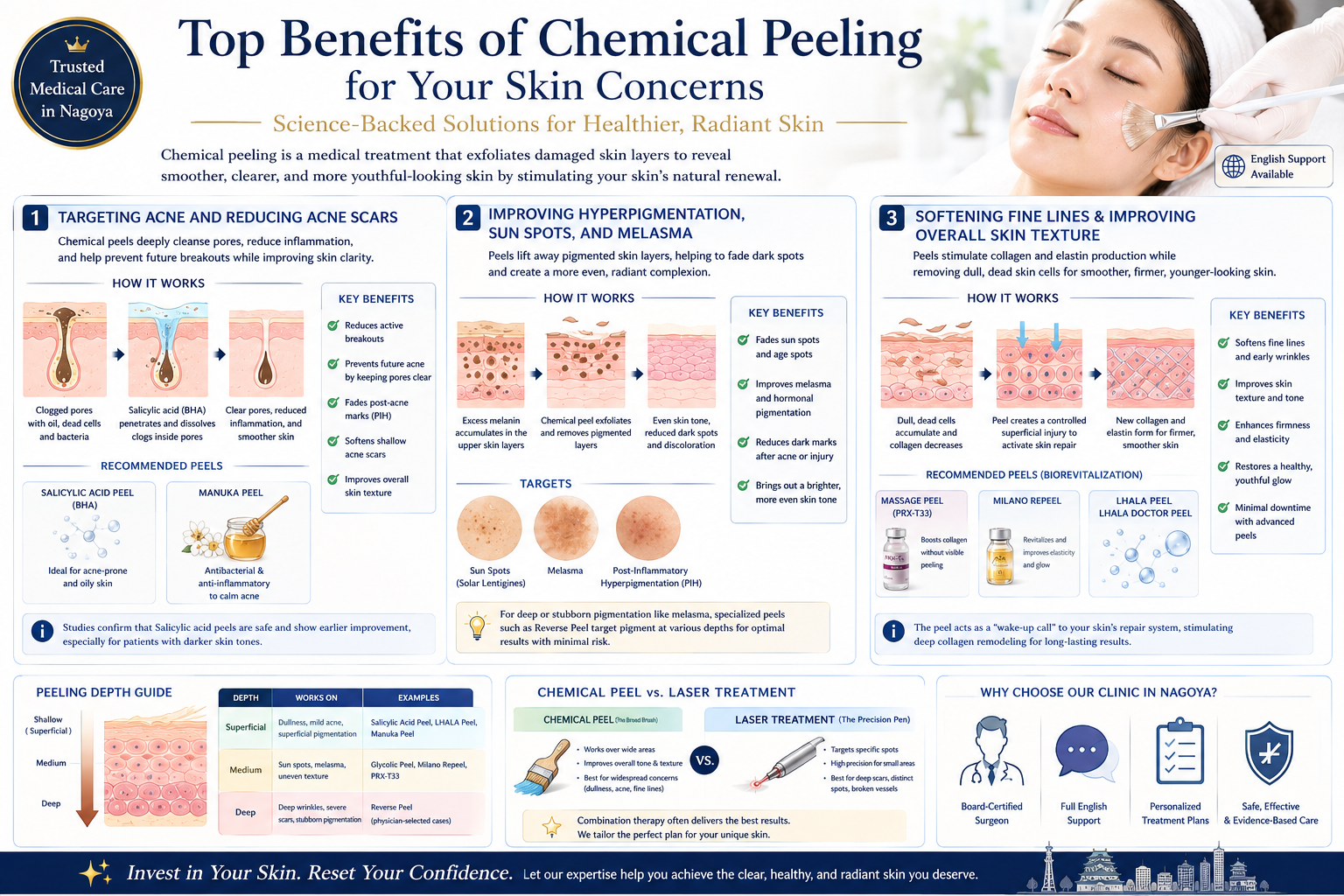
The Chemical Peel Process: What to Expect at Our Nagoya Clinic
Taking the first step toward clearer, healthier skin is exciting, but it is entirely natural to feel a bit apprehensive about a new treatment. You’re likely wondering, “What will it feel like? Will it hurt? What will I look like afterward?” As your physician, my goal is to demystify the entire process, ensuring you feel confident, informed, and comfortable from the moment you arrive at our Nagoya clinic. While the concept of using chemical solutions for skin renewal has a long history, our scientific understanding is constantly evolving. This progress, highlighted in dermatological updates, allows us to provide treatments that are far more precise, comfortable, and predictable than ever before.
Step-by-step through your treatment day
Your journey with us is designed to be a clear, comfortable, and collaborative partnership. With full English support, we ensure nothing is lost in translation. Here is a detailed look at what your appointment will entail:
- The Foundational Consultation (In English): Your appointment begins not with the peel itself, but with a conversation. You will meet directly with me, a board-certified surgeon, to discuss your skin’s story. We’ll talk about your frustrations, your goals, and your lifestyle. This is not a quick menu selection; it’s a diagnostic process. For instance, if you’re battling persistent, oily acne, I might recommend our Salicylic Acid Peel or antibacterial Manuka Peel. If your primary goal is to improve firmness and achieve a “glass skin” glow with zero downtime, we would likely discuss the Massage Peel (PRX-T33) or the ultra-gentle LHALA peel. For complex, deep-seated pigmentation, a multi-step protocol like the Reverse Peel would be our tool of choice.
- Meticulous Skin Preparation: Once we have co-created your treatment plan, our staff will escort you to a private room. They will gently but thoroughly cleanse your skin to remove all traces of makeup, sunscreen, and natural oils, creating a clean canvas. Crucially, we then apply a protective barrier cream to delicate areas like the corners of your eyes, nostrils, and mouth. This ensures the active ingredients work only where they are needed.
- The Physician’s Application: This is where the science meets the art of dermatology. I will personally apply the selected peel. The method varies significantly by type: a Salicylic Acid Peel or Black Peel is carefully painted onto the skin and timed to the second, while a biorevitalizing treatment like the Massage Peel (PRX-T33) or Milano Repeel is massaged into the skin using a specific pressure and technique to drive the ingredients into the deeper dermal layers.
- Neutralization and Soothing: At the precise moment, the peel is either neutralized with a special solution to stop its acidic action or simply cleansed away. We immediately follow this with a cooling, calming post-procedure mask packed with hydrating and anti-inflammatory ingredients to soothe your skin. The final touch is a layer of medical-grade moisturizer and a high-SPF, broad-spectrum sunscreen.
- Your Aftercare Blueprint: Before you leave, we provide you with a comprehensive, easy-to-follow aftercare guide in English. This is just as critical as the peel itself. Your diligence in following these instructions, especially regarding sun protection and hydration, is what safeguards your skin, protects your investment, and ensures a beautiful, complication-free result.
Understanding the sensation: Is it painful?
The word “acid” can sound intimidating, and one of the most common fears patients have is about pain. It’s a valid concern. Indeed, historical reviews of dermatology note that older generations of peels, such as high-concentration Trichloroacetic acid (TCA), could be quite uncomfortable and were a major limitation of the procedure.
However, the field has advanced tremendously. Modern formulations are designed to maximize results while minimizing discomfort. At our clinic, we have specifically chosen peels that prioritize patient comfort. Anesthetics are not required. Here is a more descriptive guide to what you can realistically expect to feel:
| Peel Type (Example) | Common Sensation During Treatment |
|---|---|
| Salicylic Acid / Black Peel | A temporary, ‘prickly’ or ‘spicy’ tingling that feels active. Many patients describe it as an “itchy heat.” The sensation peaks within the first minute and then rapidly subsides. We use a handheld fan to ensure your comfort. |
| Massage Peel (PRX-T33) / Milano Repeel | You will feel the pressure of the massage technique but very little, if any, stinging. Most patients report only a mild warming sensation as the product is worked into the skin. |
| LHALA Peel / LHALA Doctor | This is the gold standard for sensitive skin. The vast majority of patients feel nothing more than a cool gel being applied. It’s an ideal introduction to peels for those who are nervous about the sensation. |
Throughout the entire application, I or my trained staff will be right by your side, communicating with you and checking in on your comfort level. Any sensation you feel is temporary and a positive sign that the treatment is actively working to initiate the powerful renewal process in your skin.
Downtime and recovery: A realistic timeline
The term “downtime” can be misleading. It is better to think of the post-peel period as an active “renewal phase.” The extent of this phase is directly related to the type of peel performed. We specialize in treatments that deliver visible results without demanding that you hide away for a week.
Here are two typical recovery timelines based on the peels we offer:
Timeline 1: For Exfoliating Peels (e.g., Salicylic Acid, Black Peel, Manuka Peel)
- Immediately After (Day 0): You will likely leave the clinic with your skin looking pink and feeling warm, similar to a mild sunburn. This usually calms down within a few hours.
- Days 1-2: Your skin may feel tight and look a bit dull. This is the calm before the renewal. The outer layer of skin is preparing to shed.
- Days 3-5: This is peak flaking time. It often begins around the mouth and nose (areas of high movement) and spreads outward. The peeling can range from fine, dust-like flaking to more noticeable sheets of skin. The golden rule is to not, under any circumstances, pick, pull, or scrub the shedding skin. Doing so can interrupt the healing process and risk causing hyperpigmentation (dark spots) or even scarring. Keep your skin constantly hydrated with the recommended moisturizer.
- Day 7 and Beyond: The shedding process is typically complete. You will now see the results: your skin will feel dramatically smoother and look visibly brighter, clearer, and more even-toned.
Timeline 2: For Biorevitalization Peels (e.g., Massage Peel, Milano Repeel, LHALA peel) These advanced peels are engineered to cause a reaction deep within the skin (collagen stimulation) with little to no visible evidence on the surface.
- Immediately After (Day 0): Most patients leave the clinic with nothing more than a healthy, dewy glow. Some experience very mild, transient pinkness that fades within the hour.
- Days 1-7: There is typically no visible peeling. Your skin might feel slightly drier than usual for a day or two, but this is easily managed with moisturizer. You can apply makeup and return to your work and social life in Nagoya immediately. It’s the ultimate “lunchtime” rejuvenation.
For all peels, sun protection is absolutely non-negotiable. Your fresh, new skin is extremely vulnerable to UV radiation. Daily, diligent application of a broad-spectrum sunscreen (SPF 30 or higher, but we recommend 50+) is essential to protect your results and prevent future damage.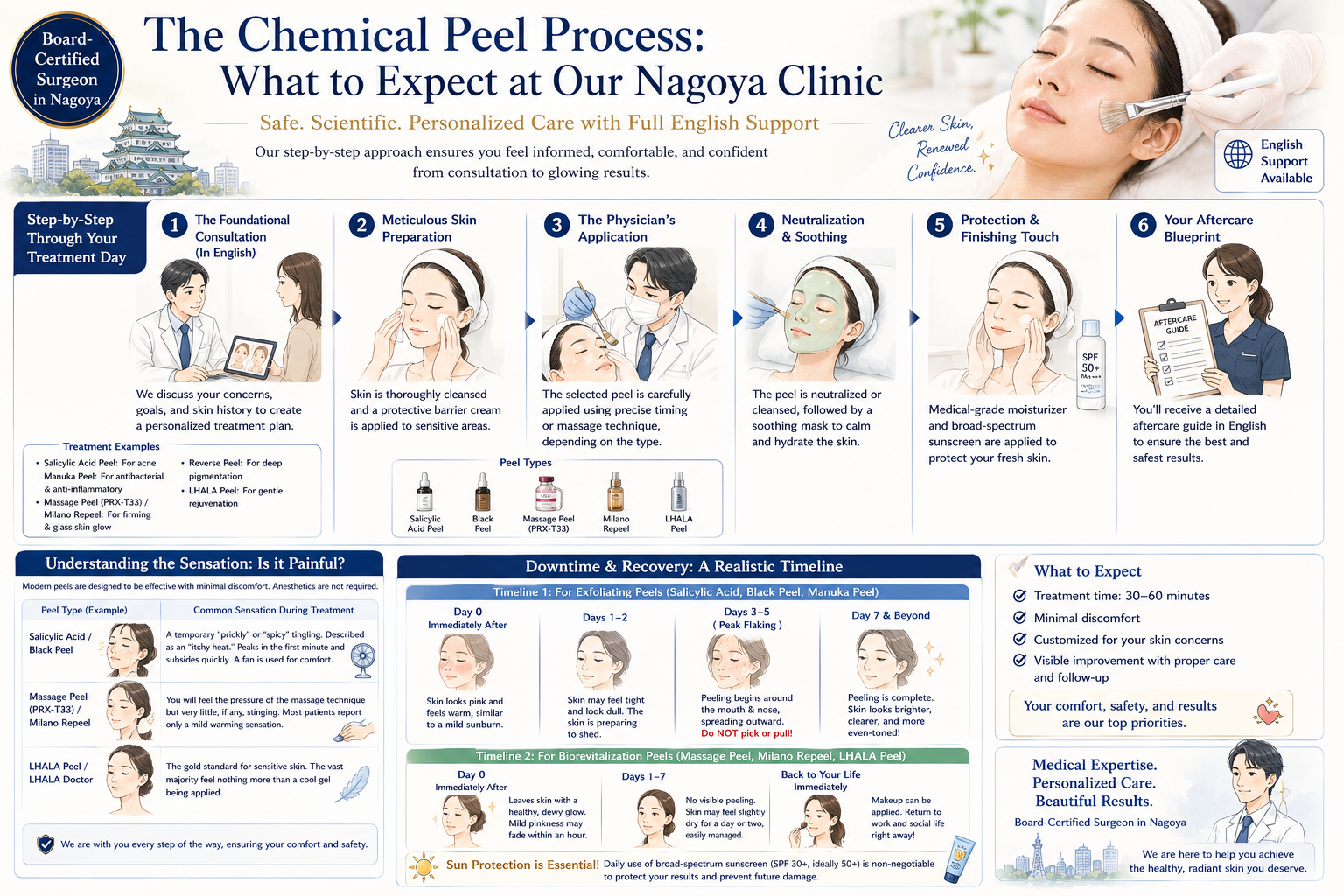
Are You a Good Candidate for a Chemical Peel?
It’s a question I hear frequently in my practice here in Nagoya: “Doctor, is a chemical peel right for me?” Perhaps you’ve tried countless over-the-counter products with disappointing results, and you’re wondering if a professional treatment is the key to finally achieving the skin you desire. The answer is that a chemical peel isn’t a simple beauty product; it’s a personalized medical prescription for your skin. The most crucial factor in a successful treatment is not just the peel itself, but the professional diagnosis that precedes it.
My role as your physician is to act as a skin detective. I assess not only the visible concern—be it acne, a dark spot, or a fine line—but also its depth and cause. As extensive dermatological research confirms, the depth of the peel is directly linked to both the therapeutic results and the potential for complications. A superficial blemish requires a superficial approach, while a deeper issue needs a more targeted solution. Choosing the wrong peel is like using a sledgehammer to hang a picture frame. A successful outcome hinges on precisely matching the treatment to your unique skin type, lifestyle, and the specific nature of your concern.
Ideal skin types and conditions for treatment
A chemical peel is an incredibly versatile tool that, when prescribed correctly, can bring about transformative results for a wide range of individuals. Rather than thinking in broad categories, let’s consider some of the real people I see every day at our Nagoya clinic.
For the person battling persistent acne and oily skin: I often meet young adults, and even people in their 30s and 40s, who are exhausted from a seemingly endless cycle of breakouts. Their pores feel constantly clogged, and their skin has a persistent shine. For them, a Salicylic Acid Peel or our Black Peel is often the ideal prescription. Salicylic acid is oil-soluble, which means it can travel deep inside the pores to dissolve the hardened mixture of oil and dead skin cells that causes plugs. It acts like a specialized pipe cleaner for your skin, clearing out the source of the problem. For inflamed, angry acne, we might opt for a Manuka Peel, which leverages powerful natural antibacterial and anti-inflammatory properties to calm the skin and prevent new blemishes.
For the person concerned with sun damage and early signs of aging: Do you look in the mirror and see the story of past summers on your face? Perhaps it’s a scattering of sun spots on your cheeks, a network of fine lines around your eyes, or a general loss of firmness. This is a classic indication for chemical peeling, a method used for centuries to address sun-induced damage. For deeper, more stubborn pigmentation or complex conditions like melasma, a specialized protocol like our Reverse Peel is required to target pigment at multiple levels within the skin. For those more focused on improving texture, softening lines, and restoring a youthful “bounce,” a biorevitalizing treatment like the Massage Peel (PRX-T33) or Milano Repeel is a game-changer. These work by stimulating your skin’s own collagen factories in the deeper layers, rebuilding its foundation from within.
For the person with sensitive skin or who wants a “glow-up” with no downtime: Many people are hesitant to try a peel, fearing irritation or having to hide away while they heal. If you have sensitive skin, or simply want to erase dullness and achieve a radiant complexion for an upcoming event, there are wonderful gentle options. Our LHALA peel and LHALA doctor are designed for this exact purpose. They use a new generation of acids that provide brilliant exfoliation and hydration with minimal to no irritation. This aligns with modern research highlighting acids that are not just exfoliants but also have beneficial properties like promoting wound healing. These gentle peels are an excellent introduction to the world of chemical resurfacing and are particularly well-suited to the delicate nature of Japanese skin.
| Patient’s Primary Goal | A Physician’s Potential Prescription | Why It Works |
|---|---|---|
| Clear stubborn acne & reduce oil | Salicylic Acid Peel, Black Peel, Manuka Peel | Penetrates and de-clogs oily pores; reduces inflammation and bacteria. |
| Reverse sun damage & soften lines | Massage Peel, Milano Repeel, Reverse Peel | Stimulates deep collagen production for firmness; lifts accumulated pigment. |
| Brighten dull, sensitive skin | LHALA Peel, LHALA Doctor | Gently renews the surface for a radiant glow with virtually zero downtime. |
Potential side effects and contraindications to consider
Your safety is my absolute and non-negotiable priority. While modern chemical peels are exceptionally safe in a medical setting, it is my duty to ensure you are fully informed about the entire process, including the healing phase and the reasons why a peel might not be suitable for you.
First, it is important to reframe the idea of “side effects.” Mild redness, a feeling of tightness, and some light skin flaking are not unwanted side effects; they are the visible, expected signs that the peel is working and your skin is beginning its powerful renewal process. The sensations are temporary and a positive indicator of the changes happening beneath the surface.
The risk of more serious complications, such as infection or lasting changes in skin color, is extremely low when the procedure is performed by a board-certified physician. We minimize these risks through two key actions: a meticulous pre-treatment consultation and the selection of the appropriate peel.
However, there are specific situations where we must postpone or avoid a chemical peel to protect your skin’s health. You are not a suitable candidate for a peel if you:
- Have used oral isotretinoin (e.g., Accutane, Roaccutane) in the last 6-12 months: This medication makes the skin exceptionally fragile and impairs its ability to heal correctly. Performing a peel would be like building on an unstable foundation, risking poor healing and scarring.
- Are pregnant or breastfeeding: While the risk of a peel affecting your baby is likely very small, there is no safety data to prove it. We always err on the side of absolute caution and will happily welcome you back for treatment after this special time.
- Have an active skin infection or open sores in the treatment area: This includes cold sores (herpes simplex), warts, or any cuts and scratches. Applying a peel to broken skin can cause the infection to spread and lead to significant complications. We must wait until the skin is fully healed and intact.
- Have a history of forming keloids or hypertrophic scars: If your skin has a tendency to produce thick, raised scars in response to injury, a chemical peel could potentially trigger this overactive healing response. A thorough review of your medical history is essential.
Finally, a special consideration for our patients in Japan is that Asian skin types can be more susceptible to developing post-inflammatory hyperpigmentation (PIH)—the formation of dark spots after an injury or inflammation—if an inappropriate peel is used or aftercare is neglected. This is precisely why a “one-size-fits-all” approach is so dangerous, and why the guidance of a physician who understands these nuances is critical to achieving a beautiful, even-toned result safely.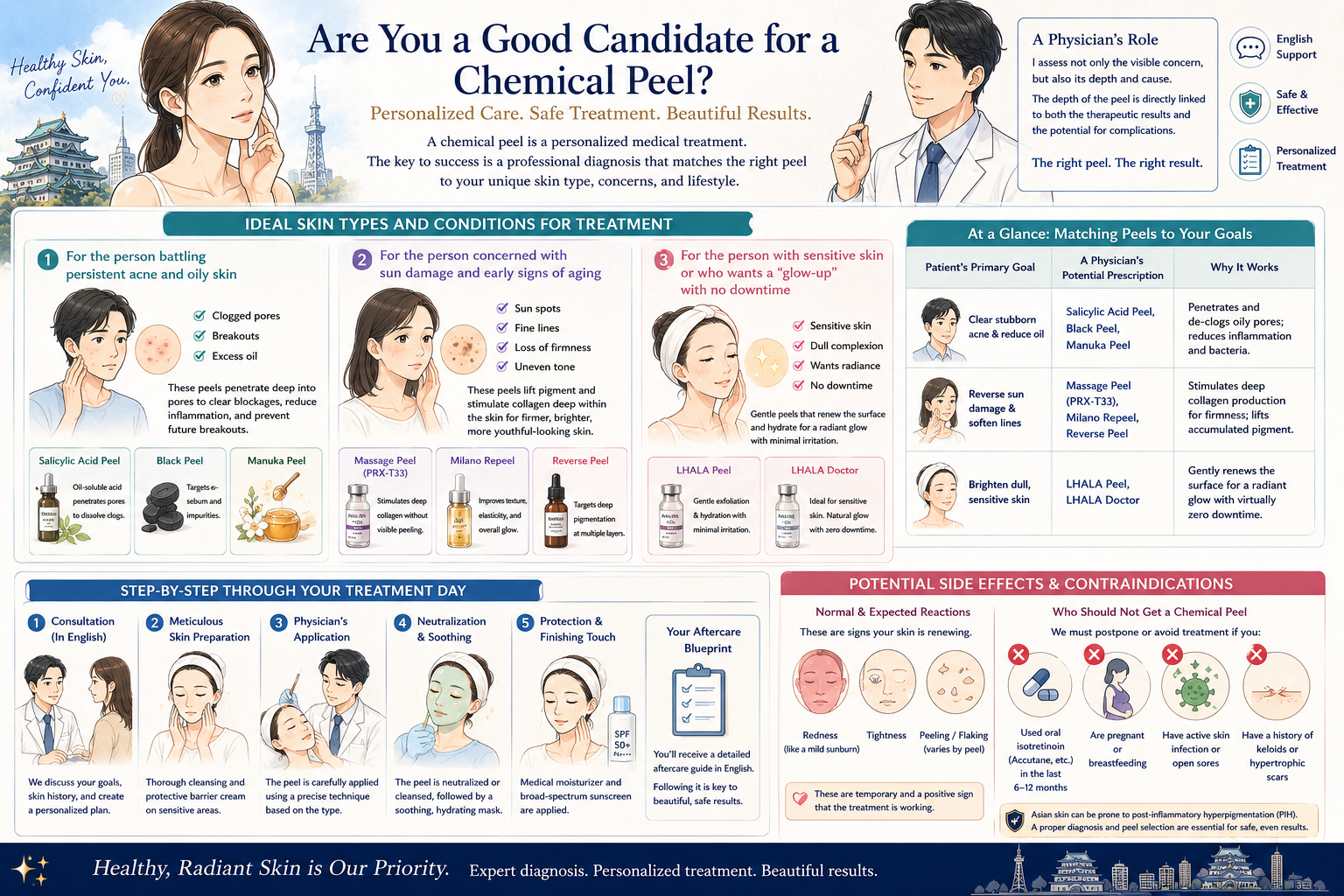
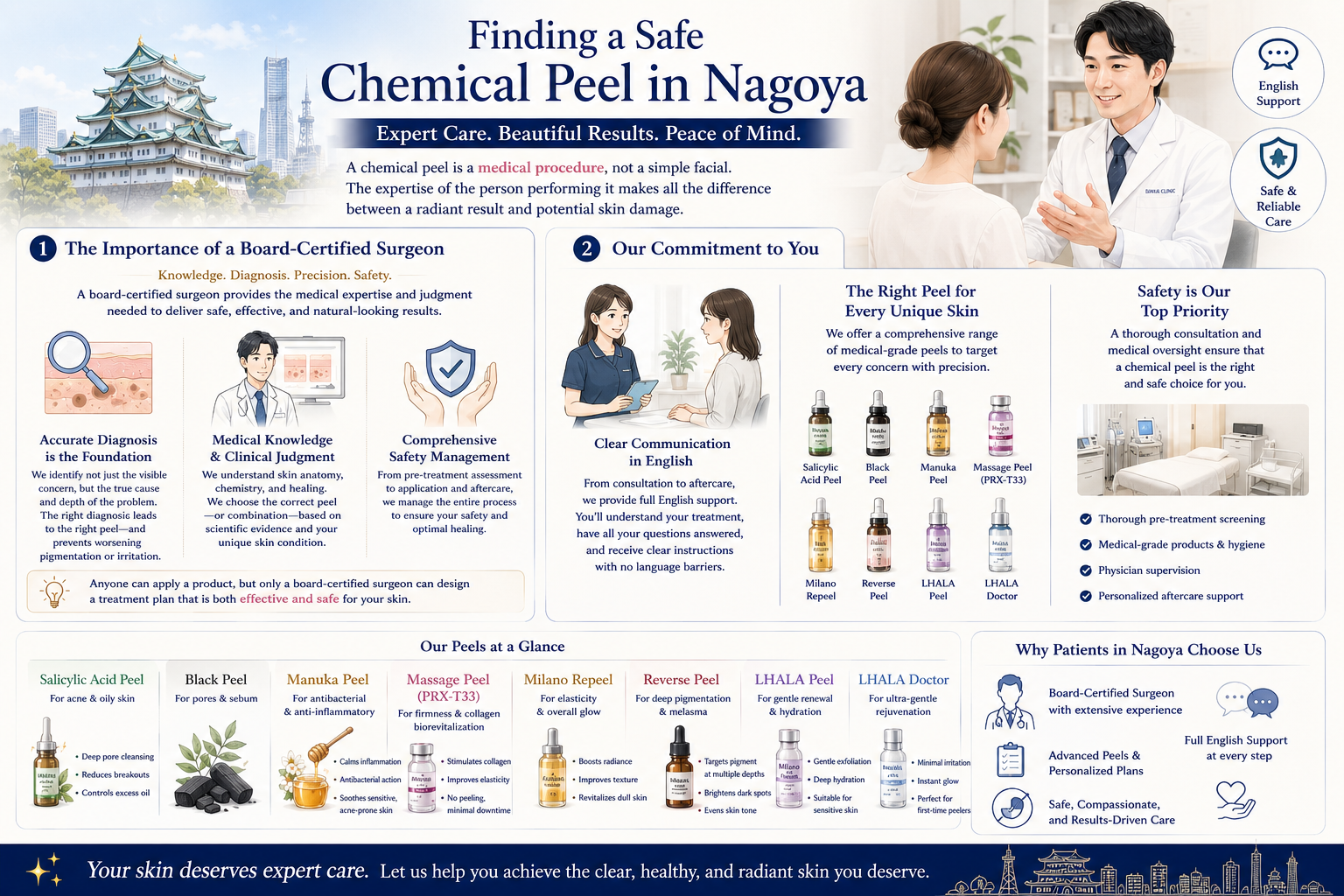
Finding a Safe Chemical Peel in Nagoya
When you search for “chemical peel in Nagoya,” you are met with a dizzying array of options, from aesthetic salons to dermatology clinics. It can feel overwhelming, especially for our international residents who need to navigate this complex landscape in a language that may not be their own. It’s easy to think of a chemical peel as a simple facial, a quick fix for brighter skin. But as a physician, I must emphasize a crucial truth: a chemical peel is a medical procedure. The difference between a beautiful, glowing result and an outcome that leaves your skin in worse condition—with burns, persistent redness, or even darker pigmentation—lies entirely in the expertise of the person performing it.
Choosing a clinic isn’t just about location or price; it’s about entrusting your skin, your body’s largest organ, to a medical professional. The goal is not simply to apply a product, but to make a precise medical diagnosis and prescribe a treatment that will safely and effectively guide your skin toward health. Making the right choice is the single most important step in your journey to the clear, vibrant skin you deserve.
The importance of a board-certified surgeon
Why is it so vital to choose a board-certified surgeon for a chemical peel? The answer lies in the history and science of the procedure itself. Medical literature, reviewing the long history of peels, documents that older, more aggressive formulations like high-concentration Trichloroacetic acid (TCA) were a double-edged sword. While they could produce dramatic results, they also came with a significant risk of side effects, which was a major limitation for years. Today, we have a much more sophisticated understanding of skin chemistry, but that knowledge only amplifies the need for expert hands.
A board-certified surgeon possesses a deep, foundational knowledge of skin anatomy, physiology, and wound healing. My role isn’t just to select a peel from a menu; it is to be a skin diagnostician.
- I see what others might miss: For example, a patient may come in asking to treat “sun spots,” but a trained eye might identify the condition as melasma. Treating melasma with a peel meant for sun spots can make the pigmentation dramatically worse. An accurate diagnosis is the bedrock of safety.
- I understand the “why” behind the “what”: We understand that a “managed method” is key. Some patients come to my clinic frustrated after laser treatments failed to improve deep-set wrinkles around the mouth. As some research points out, lasers are not always the definitive answer for every skin concern. This is where a surgeon’s skill in selecting and applying the correct peel, sometimes in combination with other therapies, can create superior, long-lasting results that a single-modality approach cannot.
- I manage the entire process: From pre-treatment skin preparation to expert application and, crucially, managing any unexpected reactions, a surgeon provides a complete circle of care. My responsibility is to ensure not only an effective treatment but also a safe and predictable healing process.
Think of it this way: anyone can buy a can of paint, but only an architect can design a building that is both beautiful and structurally sound. A board-certified surgeon is the architect of your skin’s health.
Our commitment to safety and English language support
We built our practice on the understanding that feeling safe and being clearly understood are not luxuries; they are fundamental requirements for quality medical care. This is especially true for our English-speaking patients in Nagoya, who deserve to have complete confidence in their treatment.
Our commitment to you is a promise, not a list of services.
- It means a conversation, not a transaction: Our full English support goes beyond translation. It means that when you sit with me, a board-certified surgeon, you can share your skin’s story, your frustrations, and your hopes without any language barriers. When I explain the difference between a Salicylic Acid Peel to deeply cleanse your acne-prone pores and a Massage Peel (PRX-T33) to stimulate deep collagen for firmness, you will understand the medical reasoning behind the recommendation. Your consent will be fully informed, and your post-treatment instructions will be crystal clear, eliminating any guesswork that could compromise your beautiful results.
- It means having the right tool for every unique job: A craftsman cannot build a house with only a hammer. Similarly, a physician cannot treat every skin type and concern with a single peel. Our clinic is equipped with a comprehensive toolkit of advanced, high-quality peels. This variety—from the acne-fighting Salicylic Acid Peel and Black Peel, to the collagen-remodeling Massage Peel (PRX-T33) and Milano Repeel, the antibacterial Manuka Peel, the deep-pigment targeting Reverse Peel, and the incredibly gentle LHALA Peel and LHALA Doctor for sensitive skin—is not for show. It is a medical necessity that allows me to prescribe the exact formulation your unique skin requires.
- It means safety is our starting point: Your well-being is our unwavering priority. The most important safety check happens before any peel is ever opened: a thorough, honest consultation. We will discuss your medical history, lifestyle, and goals to ensure a chemical peel is the right and safe path for you. From our meticulously hygienic environment to my direct supervision of your care, we have created a sanctuary where you can feel secure as you take this positive step toward healthier skin.
Chemical Peeling Costs and Packages in Nagoya
Investing in your skin’s health is one of the most personal and rewarding decisions you can make. It’s completely natural and wise to consider the financial aspect of this journey. At our clinic in Nagoya, we believe that transparency is a cornerstone of trust. We want you to understand not just the cost, but the value of the treatment you are receiving. This isn’t about buying a product off a shelf; it’s about co-creating a personalized medical plan. The cost of a chemical peel is a direct reflection of the sophisticated science, the quality of the ingredients, and the professional expertise required to deliver a safe, transformative result tailored specifically to you.
A clear breakdown of treatment pricing
The price of a chemical peel is determined by several factors, including the type and concentration of the active ingredients, the complexity of the application technique, and the area being treated. As research continually evolves, we understand that the effectiveness of a peel depends on a precise combination of factors like pH and application method. A lower-cost peel isn’t necessarily “better value” if it’s not the correct prescription for your skin. Our pricing reflects a commitment to using only high-quality, clinically proven formulations that I, as your physician, trust to deliver results.
All treatments are cosmetic and therefore not covered by Japanese National Health Insurance or private insurance. We accept major credit cards and cash for your convenience.
| Peel Type & A Physician’s Recommendation | Treatment Area | Price per Session (tax incl.) | Package of 5 Sessions (Recommended for lasting results) |
|---|---|---|---|
| Salicylic Acid Peel (For stubborn acne & oily T-zones) | Full Face | ¥4,950 | ¥23,500 (Save 5%) |
| Black Peel (For clogged pores, blackheads & sebum control) | Full Face | ¥11,000 | ¥49,800 (Save 10%) |
| Massage Peel (PRX-T33) (For firmness, texture & a “glass skin” glow) | Full Face | ¥8,800 | ¥41,800 (Save 5%) |
| Milano RePeel (Bi-phasic, for all-around rejuvenation) | Full Face & Neck | ¥11,800 | ¥56,050 (Save 5%) |
| Manuka Peel (Natural, antibacterial for sensitive, acne-prone skin) | Full Face | ¥10,000 | ¥47,500 (Save 5%) |
| LHALA Peel / LHALA Doctor (Ultra-gentle glow-up, perfect for beginners) | Full Face | ¥11,800 | ¥56,050 (Save 5%) |
| Reverse Peel (Customized protocol for deep, stubborn pigmentation/melasma) | Targeted Areas | from ¥13,800 | ¥65,550 (Save 5%) |
| Body Peels (e.g., Back, Chest for “bacne” or sun damage) | Upper Back | from ¥23,800 | ¥113,050 (Save 5%) |
Why Choose a Package? While a single peel can certainly give your skin a beautiful boost, think of it like going to the gym. One session feels good, but consistent training is what builds strength and creates lasting change. A series of peels, typically spaced 3-4 weeks apart, allows us to work progressively on deeper concerns like acne scarring, stubborn pigmentation, and collagen remodeling. The 5-session package is our medical recommendation for achieving the most significant and durable improvement in your skin’s health.
Why Do Some Prices Vary? You’ll notice that treatments like the Reverse Peel and body peels have a starting price. This is because these are not one-size-fits-all procedures. For a complex condition like melasma, I need to precisely map the area, assess the depth of the pigment, and create a multi-step treatment plan. This is the essence of a “managed method,” where the treatment is adjusted at every step based on your skin’s response. It is a truly bespoke medical service, and the cost reflects that level of personalization.
How to schedule your English consultation
Taking the first step is often the hardest, but we’ve made it as simple and welcoming as possible. Your initial consultation with me is the most critical part of your treatment. It’s where we move beyond guesswork and create a clear, science-backed plan for your skin, all communicated clearly in English so you feel completely confident and understood.
There are two easy ways to book your appointment:
Book Online (24/7):
- Visit our clinic’s website and click the “Book an Appointment” button.
- Please select “Initial Consultation – Chemical Peel (English).”
- You will see a calendar with available dates and times. Choose the one that works best for your schedule.
- In the information form, please fill in your name and contact details. There is also a space to briefly mention your concerns (e.g., “adult acne on chin,” “sun spots on cheeks,” “want to improve skin texture”). This information helps me prepare for our meeting. You’ll receive a confirmation email to secure your booking.
Call Our Clinic:
- You can call our main clinic number during business hours.
- Simply tell the receptionist, “I would like to schedule a consultation in English.” Our English-speaking staff will be happy to assist you, find a suitable time, and answer any logistical questions you may have before your visit.
Your consultation is a protected, private, and judgment-free space. It is far more than a simple skin check. It’s a comprehensive diagnostic session where we will discuss your medical history, your lifestyle, your previous treatment experiences, and your ultimate goals. This collaborative conversation is the foundation upon which we will build your successful skin transformation. I look forward to meeting you and starting this journey together.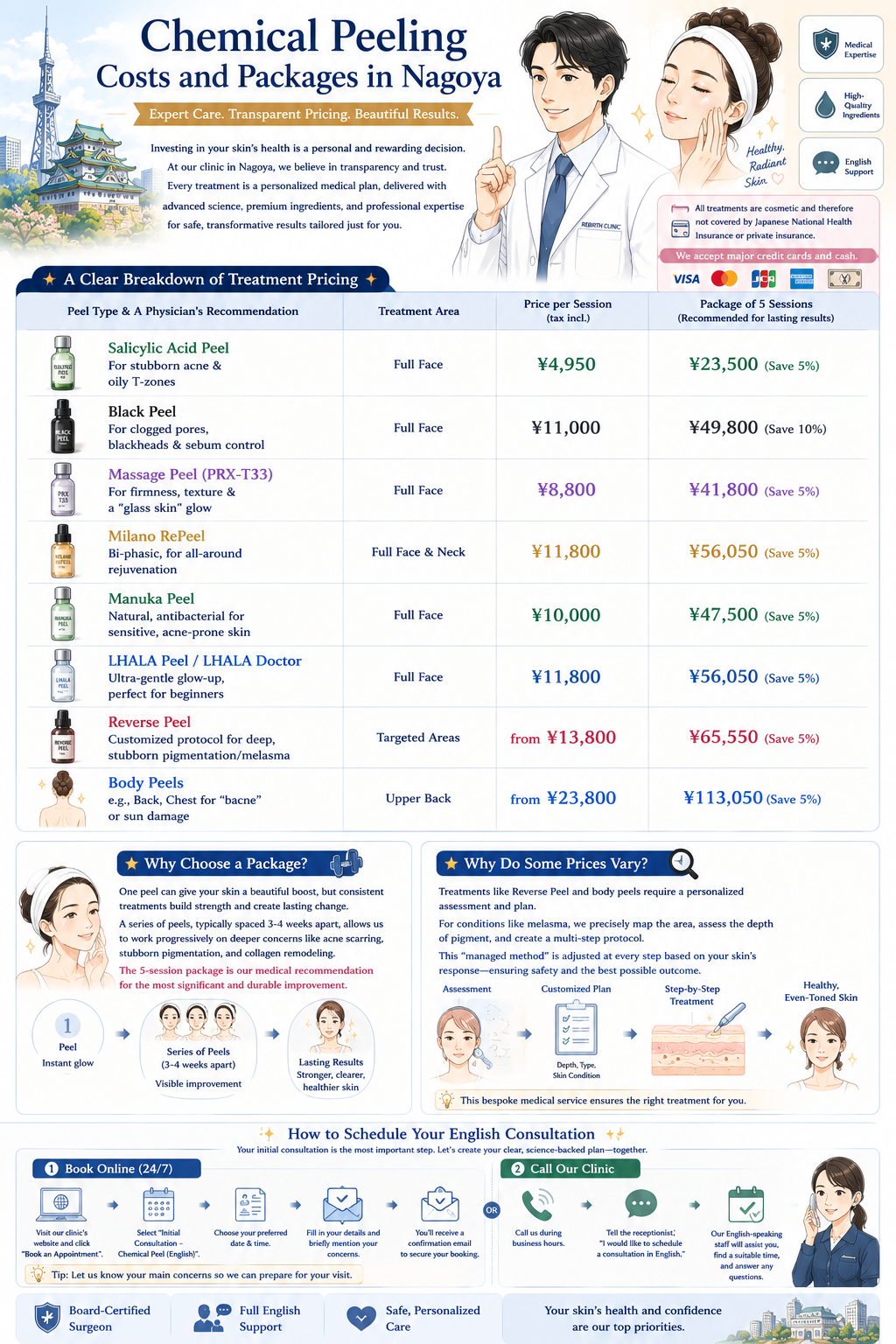
Summary
References
- Samargandy S, Raggio BS. Chemical Peels for Skin Resurfacing.
- Bensimon RH. Chemical Peels.
- Landau M, Bageorgeou F, et al. Update on Chemical Peels.
- Feng X, Shang J, Gu Z, Luo X, Chen Y, Liu Y, et al. Lactic Acid Chemical Peeling in Skin Disorders.
- Al-Talib H, et al. Efficacy and safety of superficial chemical peeling in treatment of active acne vulgaris.
- Truchuelo M, Cerdá P, Fernández LF. Chemical Peeling: A Useful Tool in the Office.
- Lee KC, Wambier CG, Soon SL, Sterling JB, Landau M, Rullan P, Brody HJ, et al. Basic chemical peeling: Superficial and medium-depth peels.


